RU
|
EN

Currently, chrome plating with a layer thickness of 45-85 microns is used to harden the surface of the rolling tool, the hardness of the chrome surface reaches 920...1050 HV. After the abrasion of the chrome coating, the active phase of tool wear begins.
The study of the condition of the rolling tool after operation showed that the chrome coating used is not sufficiently resistant to mechanical and thermal influences during the operation of the product. This is indicated by the nature of the wear of the coating, characterized in that its destruction occurs mainly by cracking and discoloration of individual chromium particles, and not by complete abrasion of the coating. During operation, the shiny chrome coating easily cracks, and in areas limited by cracks, staining occurs under the influence of high mechanical forces from friction and from thermal cycling.
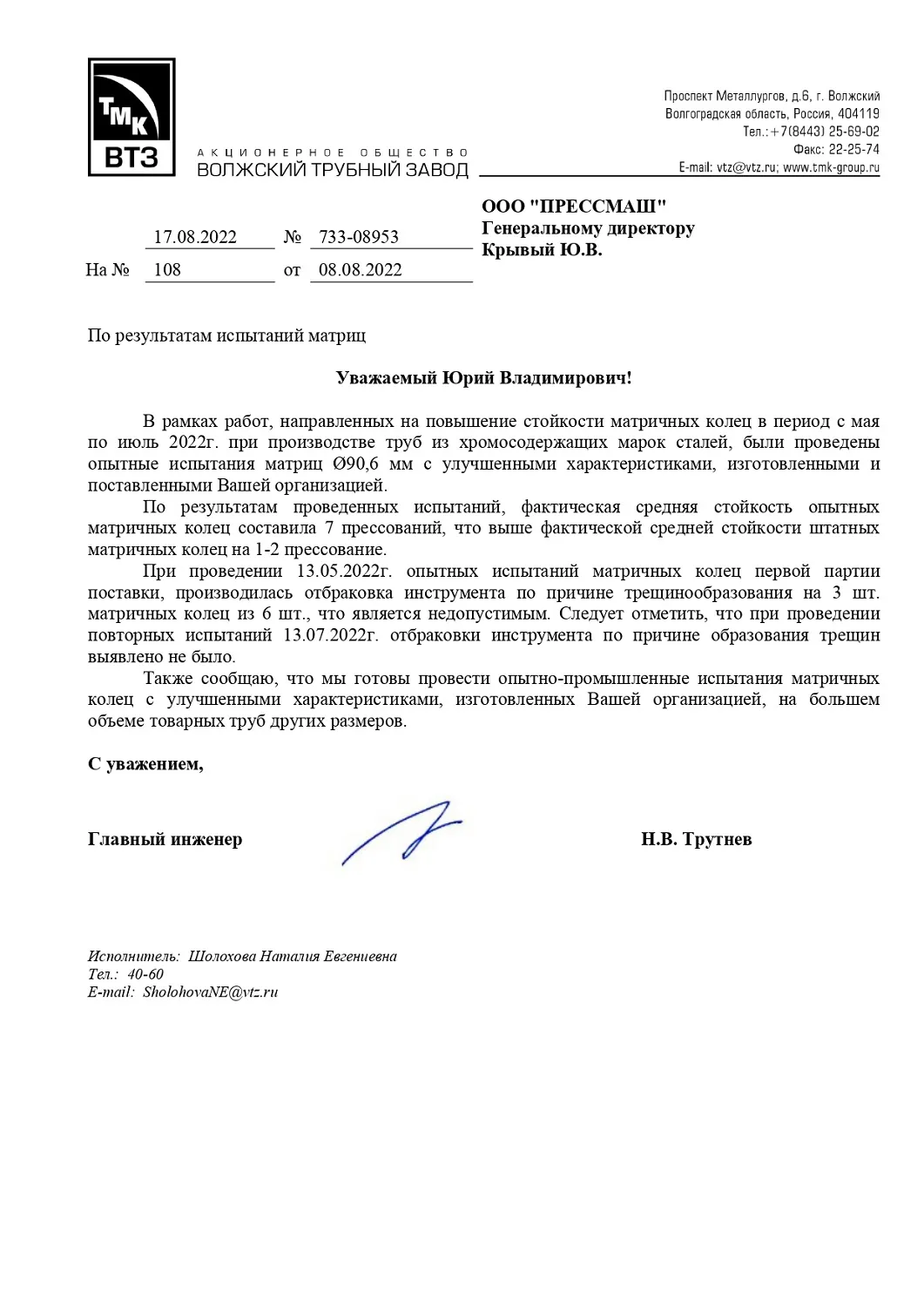
The developed innovative method of chrome plating using a chromium-cadmium electrolyte provides a chrome coating with improved physical and mechanical properties, in particular, porosity, ductility, high hardness and minimal stresses, as well as a minimal reduction in the fatigue limit of chrome steel.
The chromium-cadmium electrolyte used has the following key advantages in comparison with the standard electrolyte:
- higher cathode metal current output: 22-24% vs. 13-15% in standard electrolyte at optimal conditions;
- a wider range of cathode current density, which ensures the production of shiny chrome coatings;
- higher scattering and covering abilities: the sample bent at an angle of 90° is 99-100% coated in chromium-cadmium electrolyte, while 88-92% is covered in standard. The ratio between the maximum thickness of the chrome coating to the average for the chromium cadmium electrolyte is 1.7, and for the standard 2.1;
- higher corrosion resistance, 2-2.5 times higher than chrome coatings from a standard electrolyte;
- increased hardness (1100-1180 HV);
- insignificant porosity of 0.1-0.3 pore/cm2 versus 10 pore/cm2 or more in a standard electrolyte;
- greater plasticity and lower internal stresses;
- lower fatigue limit reduction: 20% vs. 50% for milk chrome coating from standard electrolyte;
- significantly less wear compared to the standard chrome coating: 0.0011 g vs. 0.0048 g (the wear resistance of chrome coatings deposited from standard and chromium-cadmium electrolytes was determined by the Amsler machine).
These factors provide advantages, which are as follows:
1) reduction of consumption of rolling and pressing tools by about 20%;
2) reduction of rejection on the inner surface of the pipe billet of the order of 3-5%;
3) reduction of time for equipment changeover and configuration;
4) increase equipment performance by reducing downtime during changeovers.
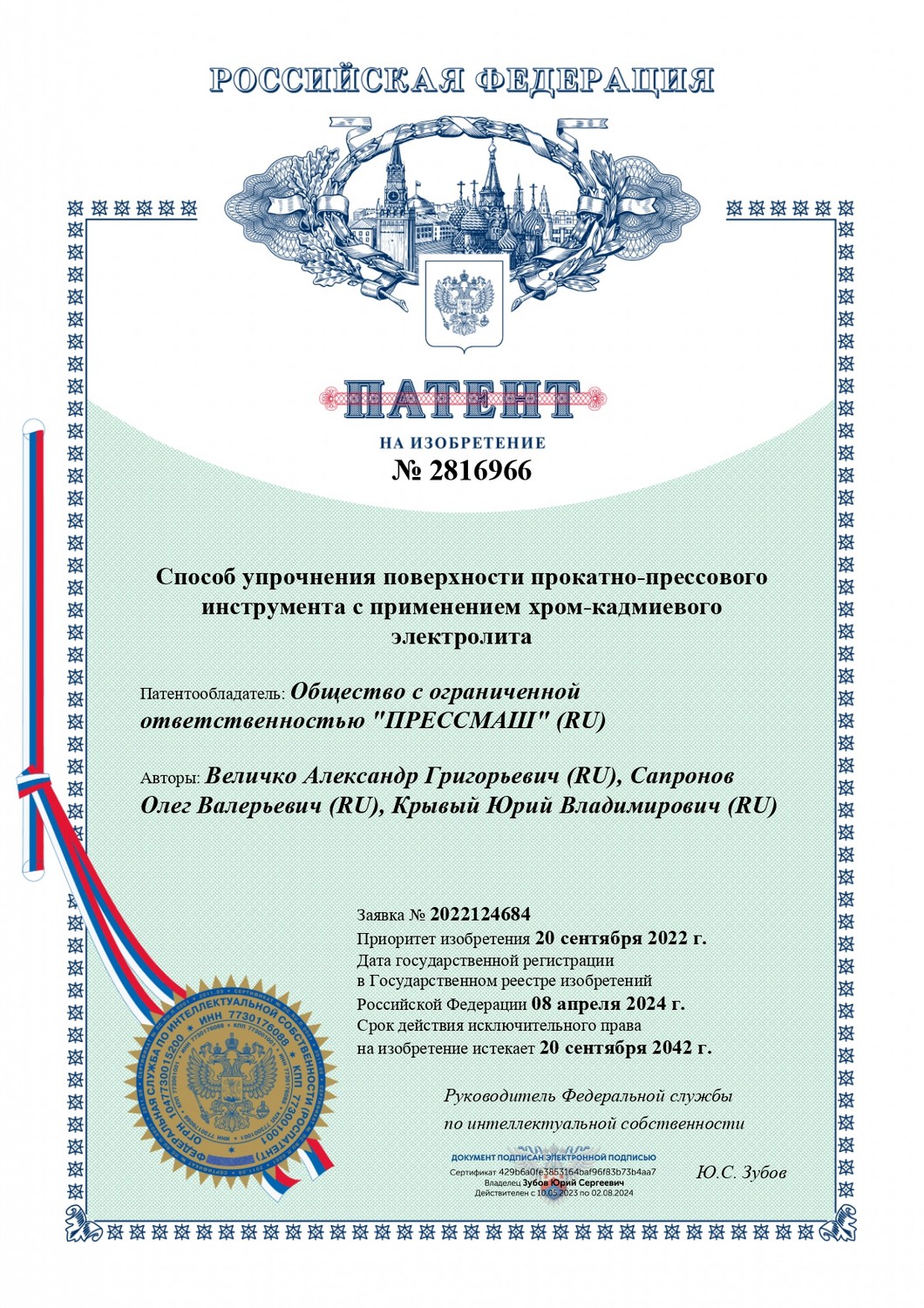
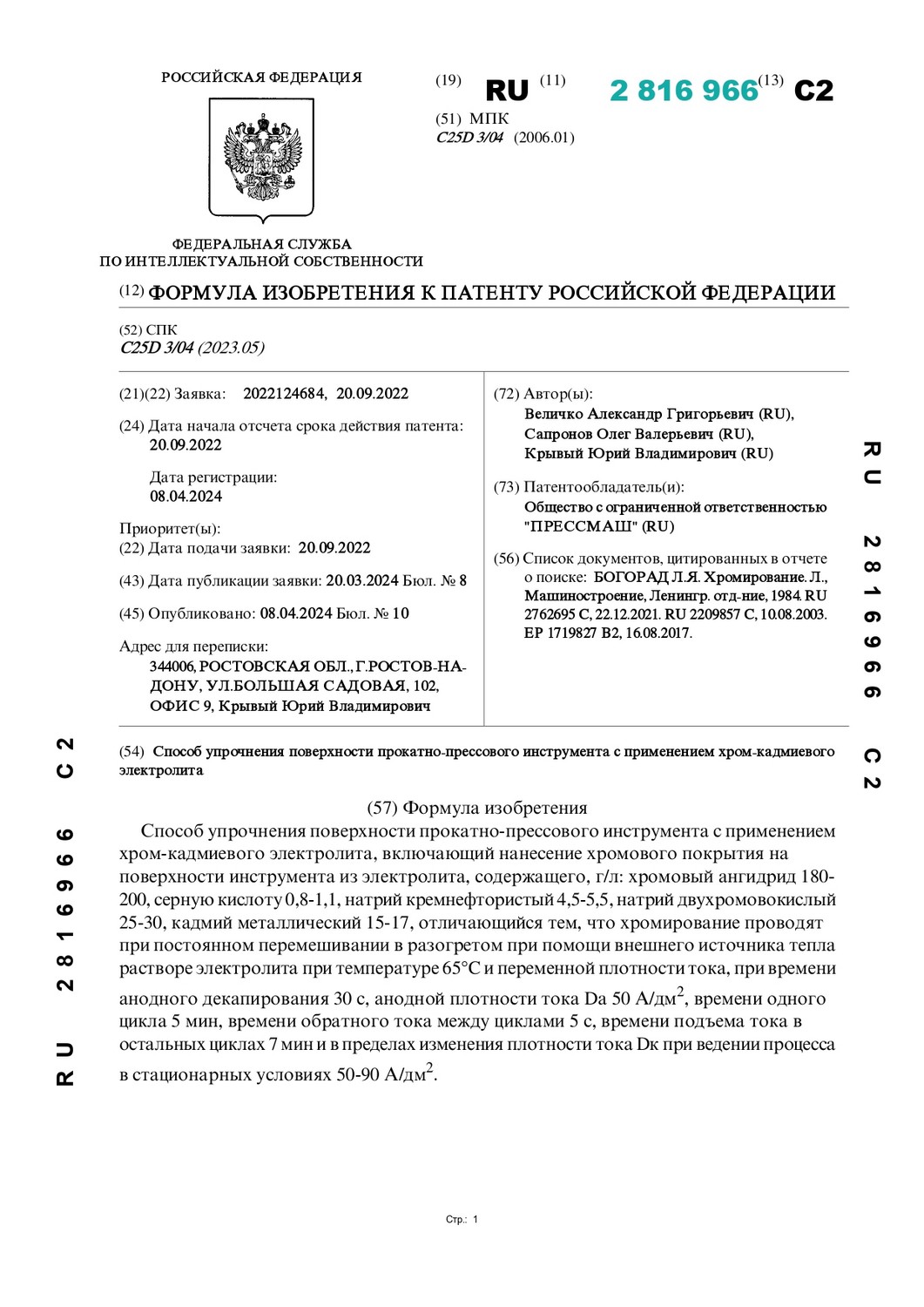
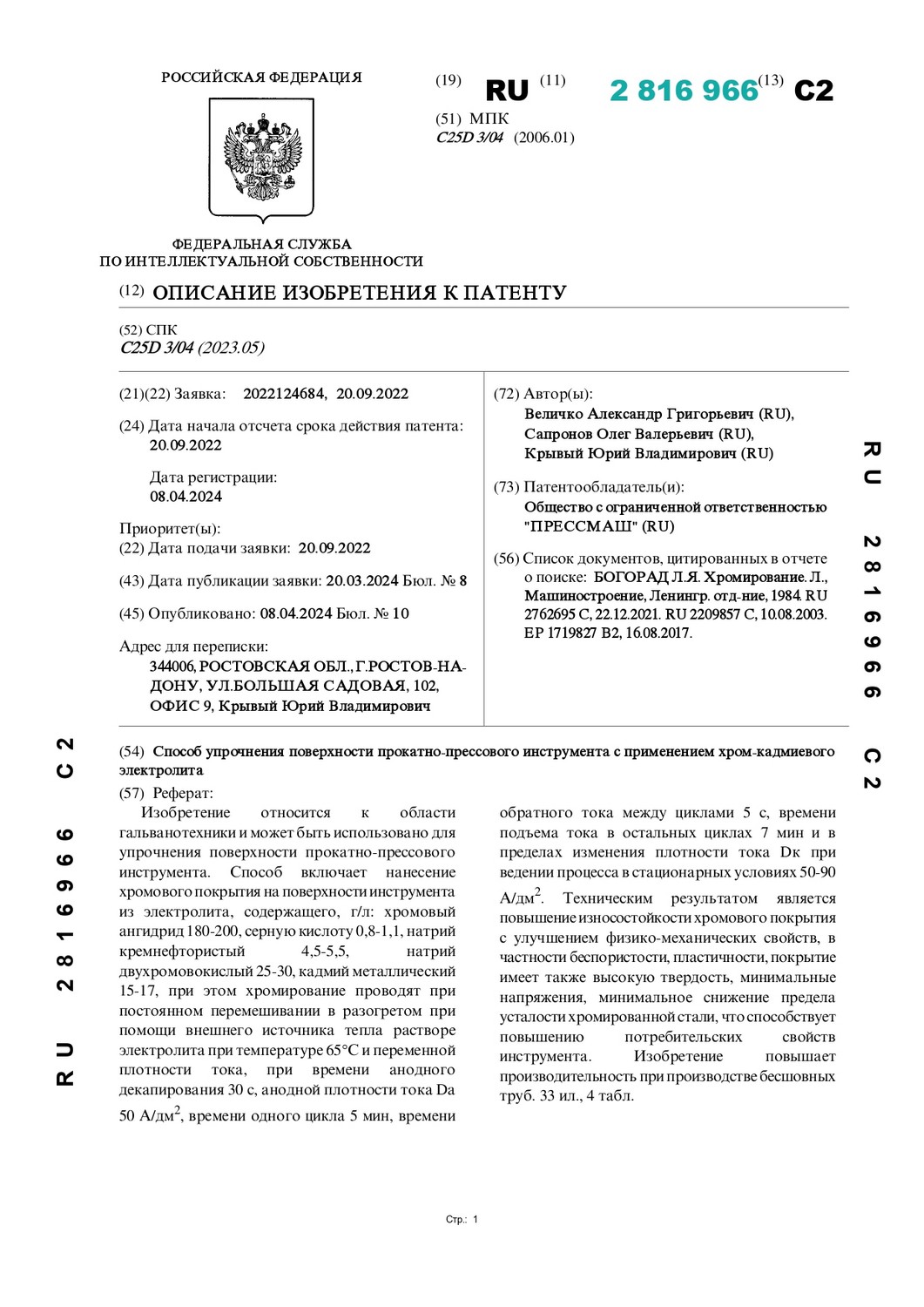
Patent No. 2816966 was obtained for a method of surface hardening and rolling-pressing tools using chromium-cadmium electrolyte